


‘Food was the thing that reminded us of who we are’: An embodied testimony of ghurba (exile) and estrangement in a post-resettlement context
- 5 days ago
- 5 min read
By Nouran El-Hawary | ISSUE 28
Food is an intertwined element in any migrant story. Yet the scarcity of food items in the story ahead was an associated memory of post-resettlement struggles. In 2024, I began my fieldwork research on mental health access and wellbeing among Arab refugees who were resettled to Dunedin (New Zealand) in 2016. Yet, the findings revealed a greater takeaway: my research participants often expressed being forced to live in Dunedin to fulfil the resettlement support programme requirement that conditions their compliance with the city allocated to them by the New Zealand Immigration Office. They strived to foster a connection with a place they were never able to choose or to change it for another one.
All Arab refugees who arrived in New Zealand came through the United Nations High Commissioner for Refugees (UNHCR) as approved asylum applicants. Yet, they had no control over which country they would be assigned to. For most, they only knew about New Zealand via the UNHCR call, telling them their application was processed. It was new to their knowledge that Australia is not the farthest point on Earth: New Zealand just happened to be after it.
The Arab refugees I talked to were living in either Lebanon or one of Far East countries as asylees; however, they had to accept the offer made by the New Zealand government. Declining it may extend their waiting for additional unforeseeable years, for another turn to a desired destination, with no guarantee if it will ever come. Accepting the offer saved them from living in precarity and legal limbo with no access to basic rights. Resettlement to a Western country carries the promise of employment, education for the children and, eventually, the potential to acquire a powerful passport. However, resettlement is rare and only goes to less than 1% of the overall refugees worldwide annually.
Such a fact may eclipse the difficulties and particularities of resettlement as experienced by refugees themselves across different contexts and places. Most of these underrepresented aspects in the lives of resettled Arab refugees were felt and given expression in relation to their attempts of reordering food and eating traditions in daily life.
Dunedin is a university city of 130,000 people, located in the South Island of New Zealand. It is the fifth-largest city in New Zealand. However, the last time the city received refugees was in the 1980s with 1200 Cambodians, fleeing the Khmer Rouge adversities. Therefore, upon the reinstatement of refugee reception in 2016, the city lacked a comprehensive refugee integration programme and an established Arab community – unlike in bigger urban centres in the North – all of which could ease adaptation.
During my conversations, I observed that research participants often used food as an analogy or an exemplar to attest to their narratives. I draw here on my conversation with my key interlocutor, Lamis, who is a former refugee from Syria and now a resettlement support worker.
***
Heading to the café with Lamis after gulping the mujadara (a black lentil rice dish) that Lamis made for lunch, I noticed her being lost in thought. Lamis mentioned that her husband wants them to move to Australia, but she opposes the idea.
I wondered, ‘Why not? It is not a bad idea, Australia is a bigger country with more promising opportunities, which is even what the New Zealanders themselves do’. Lamis said that she is not ready to go through what she described as il-jahl bil’alam (their ignorance of the pain). She meant the pain of moving to an entirely different environment than theirs, where no one could talk to them in the language they understood, or she could understand a single word in English – a pain she totally ignored until she had to experience it.
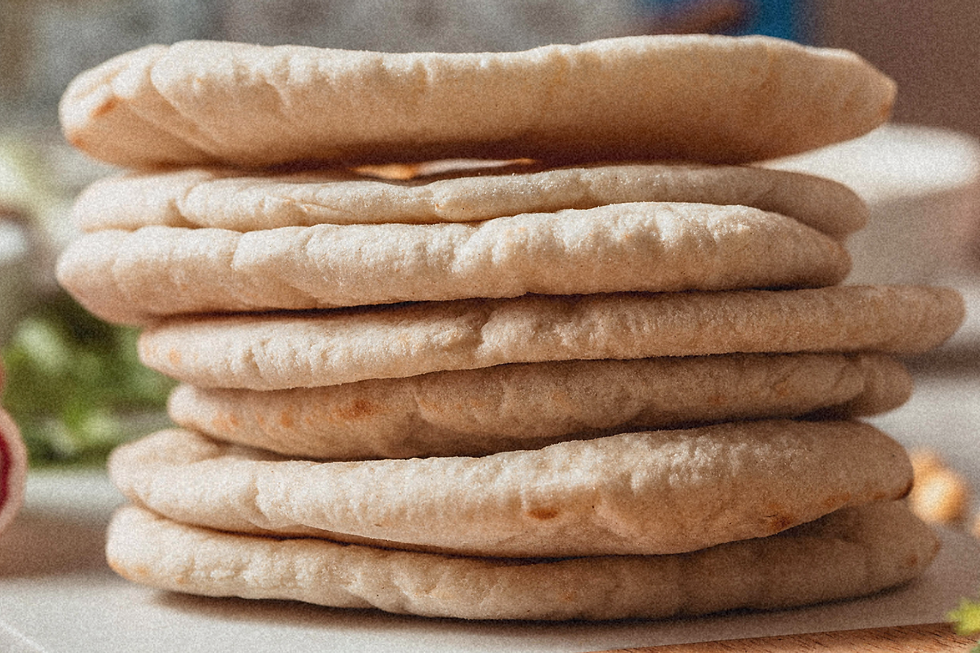
Lamis recalls, ‘We came to a country where nothing looks like us. I went to the supermarket for the first time, and they had a hundred types of bread, but not the one we eat. I couldn’t read the food labels, so I opened Google Translate on camera mode on my mobile to not spend the whole day doing groceries. We, then, had to make our own bread and cheese. The food was the only thing that we relied on ... Amir and I started to bake, and [Syrian] people were sharing and sending each other recipe videos to make things that we usually eat”’.
‘So food was the thing that helped you?’ I asked. Lamis replied, ‘Food was reminding us of who we are. That we are Arab, in an atmosphere that does not look like you [sic]... We watched our soap operas and talked to our relatives [online]. We used to do that in the beginning. People also bought big deep freezers to store the Arab bread that they shipped from Auckland…But now we are used to the toast. We even use it to make kenafa’. She laughingly added.
***
Many, like Lamis, invoke their story with food as a testimony to demonstrate the extremity of the obstacles they endured upon arrival. They had never imagined being unable to find the type of bread they used to eat, al-khubz al’arabi (the Arab bread).
The daily and mundane acts of buying, preparing and eating food had intensified their feelings of ghurba (exile) and estrangement. They found themselves having to make the bread and cheese they used to eat, but could not find in local stores. The scarcity of food staples prompted Arabs to collaborate and bring a massive food shipment from Auckland, New Zealand's largest city. Their attempt to order their foodways marks the first three years of their resettlement. Arab communities always share this anecdote to compare how they strived to settle and adapt.
Eating is socially and culturally shaped by the way we are brought up. Food is, hence, imperative to first attend to when someone moves into any new place. Since the instinct of hunger needs to be satisfied several times a day, food mediates these first impressions and senses about any given place.
Food is also connected to identity, memory and a sense of how home feels. Therefore, home-cooked dishes bring with them cosiness and warmth that a person may miss in any new environment. Paying attention to the subtle, ordinary details of eating and food preparation can tell us more about the underrepresented struggles of a post-resettlement context that is positively framed in a humanitarian imagination.


Nouran El-Hawary
Nouran is a PhD candidate in the Social Anthropology Programme, at the University of Otago (New Zealand). She is in the final stages of writing up the PhD dissertation. In 2023, she started her research project that focuses on wellbeing practices and conceptions among Arabs with a refugee background. The research topic was motivated by her earlier professional and academic involvements with refugees.


Comments